Still in its infancy and fragile, European diplomacy is about to take its first steps in Ukraine. It does not yet know when or how to step onto the stage, but everything is pushing it in that direction, as a vacuum has been created since Donald Trump ran out of steam in Iran and is now looking to make a comeback in Cuba.
For a long time, the US president had believed that Russia held all the cards, that Ukraine would have to cede the entire Donbas to Russia in order to survive, and that he could thus come to an agreement with Vladimir Putin at the expense of the Europeans, neither of whom wants to see European political unity assert itself. He had therefore never stopped twisting the Ukrainians’ arms, but Russia is treading water, if not retreating, can no longer recruit enough men to replace the 30,000 or so dead or wounded it loses every month, and Ukraine is managing to damage enough Russian refineries to ensure that the surge in crude oil prices has not benefited the Kremlin as much as it might have hoped.
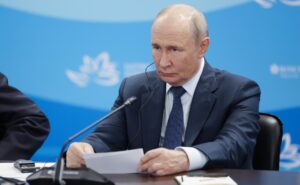
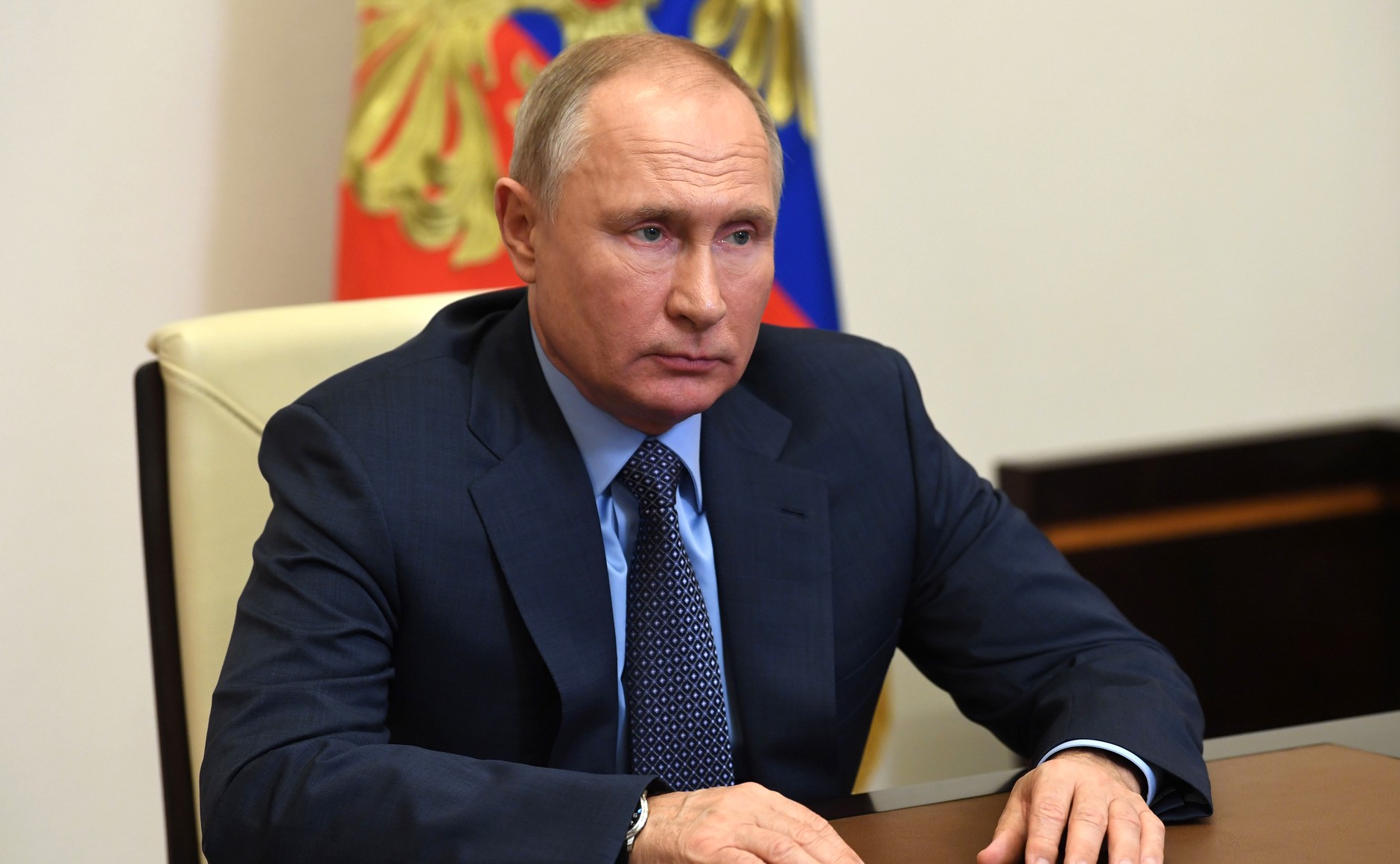
Vladimir Putin is holing up so well that he is now nicknamed ‘grandpa in his bunker’. The wealthy, the middle classes and even those close to the president are becoming increasingly anxious, and although the Russian army is stepping up provocations against the Baltic states to test Western reactions, the idea that this war must be brought to an end is gaining ground in Moscow.
The Kremlin is now quite openly declaring itself ready for talks with Europe, as Donald Trump is no longer in a position to force a surrender on Kyiv, whilst the EU has just released a €90 billion loan to Ukraine. However much he may regret it, Vladimir Putin’s necessary interlocutor is no longer America but Europe, and the Europeans are, for their part, perfectly aware that this is their moment of truth.
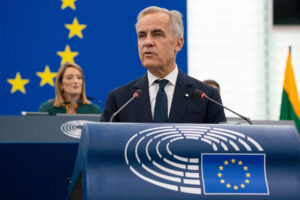
For them, it is a matter of to be or not to be. Either they rise to this challenge, or the EU gives up on asserting itself as a player on the international political stage; and so, for several weeks now, they have been searching for a negotiator. Vladimir Putin has suggested his friend Gerhard Schröder, the former German chancellor whom he appointed chairman of Gazprom’s board of directors. The Europeans have, of course, declined, but are wavering between the current head of their diplomatic service, the Estonian Kaja Kallas; the former President of the European Central Bank, the Italian Mario Draghi; the Finnish President Alexander Stubb; his predecessor, Sauli Niinistö; or even the Portuguese Antonio Costa, who has a major asset in his favour.
As President of the European Council, he represents the consensus of the 27 heads of state and government who have placed him at the helm of their circle. This would give him decisive leverage over Vladimir Putin, and that is not all, for with him, European diplomacy would be clearly placed under the authority of the Member States, whereas in recent years the Commission has tended to take it upon itself. We shall see, but fundamentally, do the Europeans have the ability to impose on the Kremlin a compromise that the Ukrainians can accept?
At first glance, no, since the Russian Constitution has been amended to make the whole of Donbass part of the Russian Federation; the Kremlin has thus tied its own hands and consequently demands that negotiations offer it what it has failed to secure by force of arms.
This is the crux of the problem, but if Vladimir Putin, forced to bring the conflict to an end, were to resolve to accept a ceasefire along the front line, a settlement would become possible. The Kremlin could argue that peace required part of the Donbas to remain ‘occupied’ by Ukraine, whilst the Ukrainians could renounce the reconquest of Russian-controlled territories without, however, accepting their annexation.
Just as there were two Germanys, there would be a Russian Ukraine and an independent Ukraine. The necessary wording is not beyond reach, and everything hinges in fact on the security guarantee that the EU should give to the Ukrainians by accepting them into its ranks without delay, forgetting all procedures. Several avenues are being explored, and the German Chancellor has just proposed that Ukraine be associated with the EU by sitting in all its institutions but without immediately having voting rights.
The broad outlines of a compromise are clear, but there will be no real breakthrough until the course of the war has convinced Vladimir Putin of the impossibility of seizing the whole of the Donbas. This will take the whole summer and perhaps longer.
Photo : Wikimedia Commons