The Five Dangers of an Iranian Defeat

As incongruous as it may seem, let’s ask ourselves the question. Whose defeat should we hope for? That of the Iranian regime or that of Donald Trump?

The Islamic Republic has claimed so many victims, created so many proxies of terror to be able to strike everywhere and to destabilize the entire Middle East, pursued nuclear weapons so relentlessly, ruined its own country so thoroughly, and managed to make itself so hated by its own people that one can obviously only wish for its downfall.

The sooner the better. However, what if Donald Trump were soon able to boast that he had toppled this dictatorship by declaring war on it? It would give us many reasons to celebrate — but not only.

Even as he loses ground in the polls today, this president would retain his majority in the Senate and perhaps even in both chambers. Far from impossible, his victory would silence the Democrats and all those of his supporters who criticize him for having dragged America into a new military adventure. You see, he would say, the ordeal didn’t last that long after all, and it was worth it. “You can see that I was right against everyone,” he would harp on, and, at the same time, well before November, well before voters head to the polls for the midterm elections, gas prices would drop and economic anxiety would ease in the United States as well as around the world.

Donald Trump would regain the upper hand and, bolstered on the domestic stage, he would go back on the offensive on at least five fronts.

Just like last summer, he would try to force the Ukrainians to cede to the Russians the parts of the Donbas that they claim but have failed to secure by force of arms. Donald Trump would not serve the cause of peace by facilitating a ceasefire along the front lines. He would threaten the Ukrainians with cutting them off from U.S. intelligence to force them to accept the surrender demanded by the Kremlin.

In what would become a “rear alliance” against us, the Europeans, he would thus take new steps toward the Kremlin because he believes that the Union was designed, as he puts it, to “screw the United States” and his obsession is to dismantle it by weakening it in the face of Putin. One of them sees the Union as an economic and political competitor that must not be allowed to assert itself. The other sees it as an obstacle to the restoration of the Tsarist Empire. For both, Ukraine must lose this war so that the United States and Russia can divide Europe into spheres of influence.

The second front that Donald Trump would not hesitate to reopen would be Greenland, which he has by no means given up on annexing.

Already reignited, his third front would be the trade war he is waging against the EU, since Europe must, in his eyes, be a divided market and not a political partner with whom to deal on equal terms.

Fourth, Donald Trump would redouble his efforts to destroy the Atlantic Alliance by undermining its credibility, thereby allowing Russia to increase its pressure on Europe.

As for the fifth front on which he would engage without restraint, it would be that of the checks and balances of American democracy—the press and the judiciary—which he would attack with even greater force.

Challenges for Europe and the retreat of American democracy—in short, there would be much to fear from a Donald Trump victory in Iran. The defeat of this regime is nonetheless vital for 90 million Iranians, the prevention of nuclear proliferation, and the stability of a crucial region. For us Europeans, therefore, it is not a matter of remaining spectators. It is a matter of preparing for either of these two scenarios and, to that end, strengthening our defenses far more rapidly than we are currently doing, expanding our alliances across the five continents, and finally asserting ourselves as a political power. It is urgent.

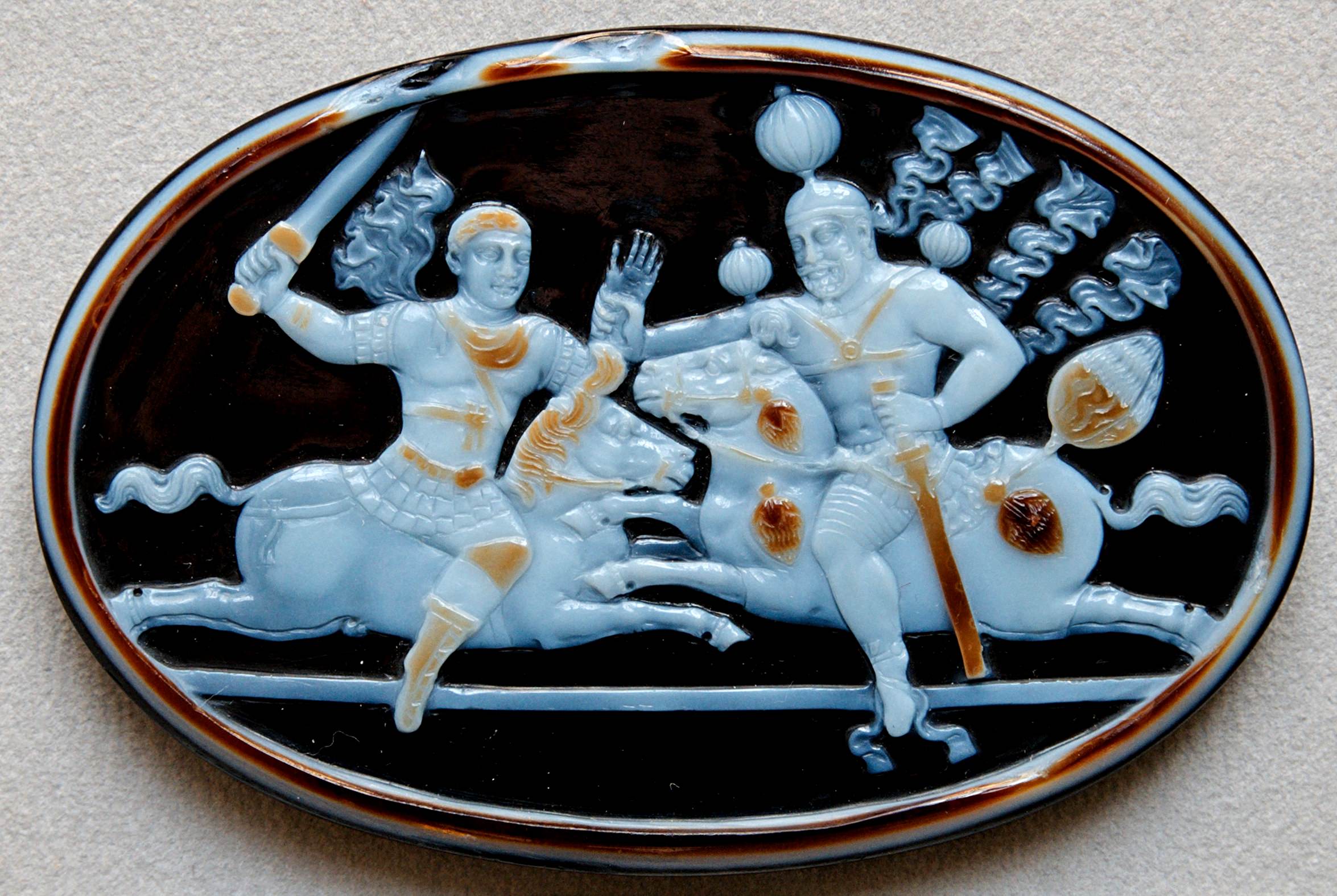
Image: A sardonyx cameo depicting the defeat of Roman emperor Valerian (r. 253-260 CE) by the Persian king Shapur. c. 260 CE. (Cabinet des Médailles, National Library, Paris)

Français Polski Русский

The Five Dangers of an Iranian Defeat

As incongruous as it may seem, let’s ask ourselves the question. Whose defeat should we hope for? That of the Iranian regime or that of Donald Trump?

The Islamic Republic has claimed so many victims, created so many proxies of terror to be able to strike everywhere and to destabilize the entire Middle East, pursued nuclear weapons so relentlessly, ruined its own country so thoroughly, and managed to make itself so hated by its own people that one can obviously only wish for its downfall.

The sooner the better. However, what if Donald Trump were soon able to boast that he had toppled this dictatorship by declaring war on it? It would give us many reasons to celebrate — but not only.

Even as he loses ground in the polls today, this president would retain his majority in the Senate and perhaps even in both chambers. Far from impossible, his victory would silence the Democrats and all those of his supporters who criticize him for having dragged America into a new military adventure. You see, he would say, the ordeal didn’t last that long after all, and it was worth it. “You can see that I was right against everyone,” he would harp on, and, at the same time, well before November, well before voters head to the polls for the midterm elections, gas prices would drop and economic anxiety would ease in the United States as well as around the world.

Donald Trump would regain the upper hand and, bolstered on the domestic stage, he would go back on the offensive on at least five fronts.

Just like last summer, he would try to force the Ukrainians to cede to the Russians the parts of the Donbas that they claim but have failed to secure by force of arms. Donald Trump would not serve the cause of peace by facilitating a ceasefire along the front lines. He would threaten the Ukrainians with cutting them off from U.S. intelligence to force them to accept the surrender demanded by the Kremlin.

In what would become a “rear alliance” against us, the Europeans, he would thus take new steps toward the Kremlin because he believes that the Union was designed, as he puts it, to “screw the United States” and his obsession is to dismantle it by weakening it in the face of Putin. One of them sees the Union as an economic and political competitor that must not be allowed to assert itself. The other sees it as an obstacle to the restoration of the Tsarist Empire. For both, Ukraine must lose this war so that the United States and Russia can divide Europe into spheres of influence.

The second front that Donald Trump would not hesitate to reopen would be Greenland, which he has by no means given up on annexing.

Already reignited, his third front would be the trade war he is waging against the EU, since Europe must, in his eyes, be a divided market and not a political partner with whom to deal on equal terms.

Fourth, Donald Trump would redouble his efforts to destroy the Atlantic Alliance by undermining its credibility, thereby allowing Russia to increase its pressure on Europe.

As for the fifth front on which he would engage without restraint, it would be that of the checks and balances of American democracy—the press and the judiciary—which he would attack with even greater force.

Challenges for Europe and the retreat of American democracy—in short, there would be much to fear from a Donald Trump victory in Iran. The defeat of this regime is nonetheless vital for 90 million Iranians, the prevention of nuclear proliferation, and the stability of a crucial region. For us Europeans, therefore, it is not a matter of remaining spectators. It is a matter of preparing for either of these two scenarios and, to that end, strengthening our defenses far more rapidly than we are currently doing, expanding our alliances across the five continents, and finally asserting ourselves as a political power. It is urgent.

Image: A sardonyx cameo depicting the defeat of Roman emperor Valerian (r. 253-260 CE) by the Persian king Shapur. c. 260 CE. (Cabinet des Médailles, National Library, Paris)

Français Polski Русский