Europe and the End of the American World

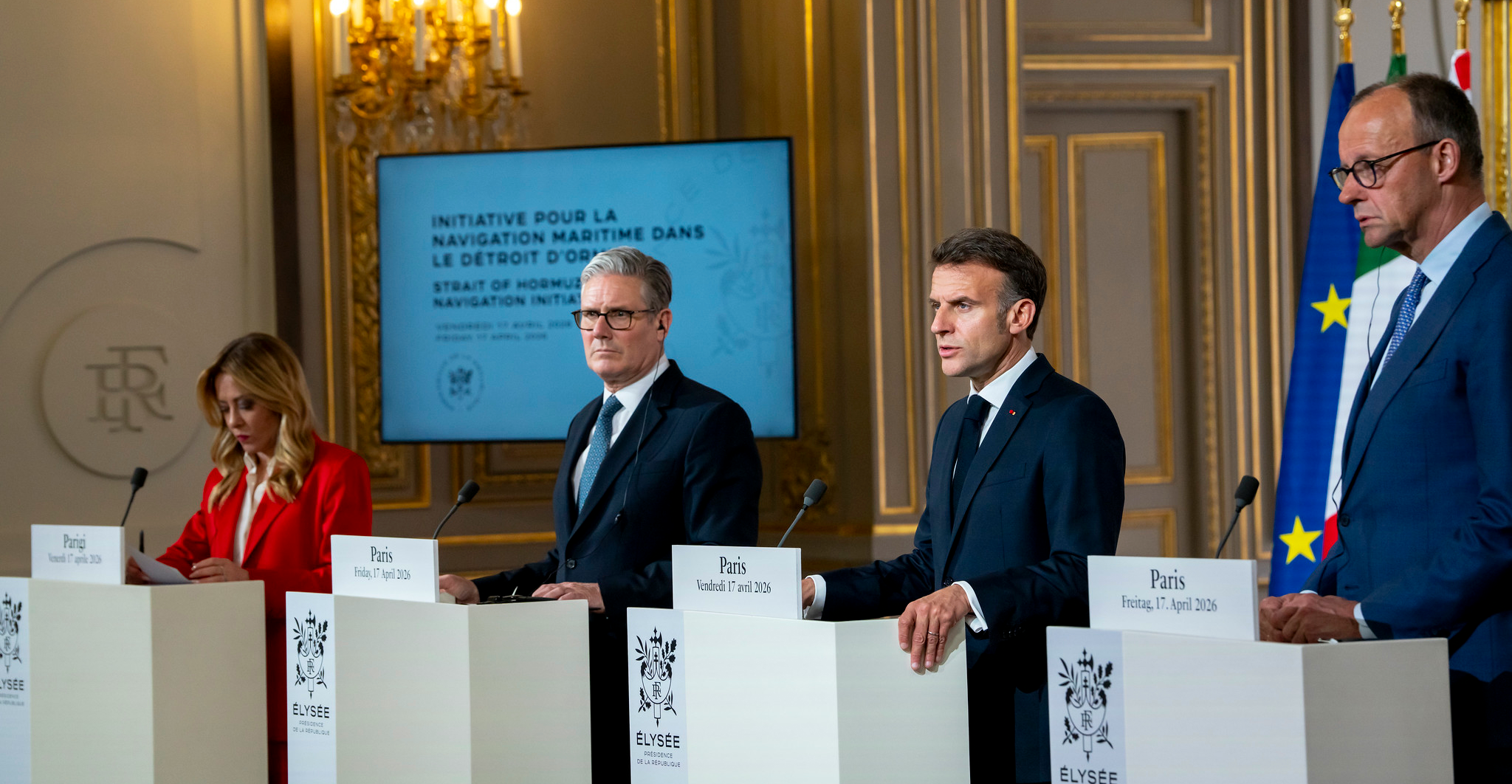
It is a moment that history will remember. Standing behind carefully aligned microphones, the German Chancellor, the French President and the heads of the Italian and British governments explained, last Friday, the purpose of their ‘initiative’ regarding the Strait of Hormuz, which had brought together some fifty countries in Paris.

It was as if Britain had never left the Union, as if Germany and France had put all their differences aside, as if Italy had stopped playing the American card on its own. Not only were Europe’s four leading economies asserting themselves as Europe’s political leadership, but Indonesia and Japan, Ukraine and Saudi Arabia, Singapore, and even India and Australia – a quarter of the world’s nations, and by no means the least significant – stood shoulder to shoulder with them that day, pledging to ensure freedom of navigation in this vital strait.

This was not, of course, for the immediate future, as it would have been futile to add their voices to the ongoing confusion. It was for later, when the guns had fallen silent, but this meeting was all the more significant because what the Europeans were sketching out on Friday was, in fact, the international order they would like to substitute for the global disorder created by Donald Trump.

For this man has discredited American power so much that neither the Gulf, nor Asia, nor Europe trusts the United States any longer, and the world no longer has a policeman, neither good nor bad. The Gulf monarchies themselves no longer wish to depend solely on American protection since the world’s most powerful army has proved incapable of shielding them from the consequences of the war launched against Iran. The oil monarchies are seeking to find their place within a new balance of power, and the same goes for the United States’ Asian allies, who find it hard to forgive the US for having launched this war without regard for freedom of navigation in the Strait of Hormuz, through which more than two-thirds of their energy supplies pass.

Led by Japan, they are now wondering whether Donald Trump might soon seek to strike a deal with China at their expense, just as he is attempting to strike a deal with Russia at the expense of the Ukrainians and the whole of Europe.

As for the Europeans, they have seen war return to their continent after Trump made it clear, from his very first term, that their membership of the Atlantic Alliance no longer guaranteed them US nuclear protection. It is as if Russia felt free to invade Ukraine, and the Europeans subsequently had to discover that the White House might consider withdrawing from NATO and even annexing Danish territory by force.

A vast void has been created, but the deeper it grows, the more Europe seeks, step by step, to assert itself as a political power. Unanimously, the Member States first decided to establish a common defence, something they had long refused to lay the foundations for – with the exception of France – because they feared it would accelerate a drift away from the United States.

Funds have been released and, despite their inadequacy, the shift has been so successful that the idea of strategic autonomy has also taken hold. Europe has made it clear that it would oppose any plans to annex Greenland by force of arms. In doing so, the Union protected its borders and took sole responsibility for supporting the Ukrainians; and when Trump sought to force Volodymyr Zelensky to accept a surrender plan concocted by the Kremlin, it was again the Union that stood firm against it by forming, on the initiative of Paris and London, a ‘coalition of the willing’ to defend Ukraine.

It is the existence of this coalition that enabled the 50 countries to come together on Friday to address the issue of Hormuz. Since last summer, the 27 have thus become a player on the international stage and, in parallel, following Mercosur, the EU is signing more trade agreements with India and Australia. It has just relaxed its competition rules to encourage the consolidation of industrial giants capable of standing up to those of China and the United States. For several months now, France has been working to make its military might the new umbrella for Europe. Through defence and industry, trade and political rapprochement, the EU is strengthening itself and seeking to foster a new network of countries capable of reinventing international stability.

There is still a long way to go. The European institutions are not suited to this new reality. Until the centrist and social-democratic parties acknowledge that together they form the camp of democracy, the path will remain open to the far right. Time is running out. It is late, but if not Europe, then who?

Photo: elysee.fr

Français

Europe and the End of the American World

It is a moment that history will remember. Standing behind carefully aligned microphones, the German Chancellor, the French President and the heads of the Italian and British governments explained, last Friday, the purpose of their ‘initiative’ regarding the Strait of Hormuz, which had brought together some fifty countries in Paris.

It was as if Britain had never left the Union, as if Germany and France had put all their differences aside, as if Italy had stopped playing the American card on its own. Not only were Europe’s four leading economies asserting themselves as Europe’s political leadership, but Indonesia and Japan, Ukraine and Saudi Arabia, Singapore, and even India and Australia – a quarter of the world’s nations, and by no means the least significant – stood shoulder to shoulder with them that day, pledging to ensure freedom of navigation in this vital strait.

This was not, of course, for the immediate future, as it would have been futile to add their voices to the ongoing confusion. It was for later, when the guns had fallen silent, but this meeting was all the more significant because what the Europeans were sketching out on Friday was, in fact, the international order they would like to substitute for the global disorder created by Donald Trump.

For this man has discredited American power so much that neither the Gulf, nor Asia, nor Europe trusts the United States any longer, and the world no longer has a policeman, neither good nor bad. The Gulf monarchies themselves no longer wish to depend solely on American protection since the world’s most powerful army has proved incapable of shielding them from the consequences of the war launched against Iran. The oil monarchies are seeking to find their place within a new balance of power, and the same goes for the United States’ Asian allies, who find it hard to forgive the US for having launched this war without regard for freedom of navigation in the Strait of Hormuz, through which more than two-thirds of their energy supplies pass.

Led by Japan, they are now wondering whether Donald Trump might soon seek to strike a deal with China at their expense, just as he is attempting to strike a deal with Russia at the expense of the Ukrainians and the whole of Europe.

As for the Europeans, they have seen war return to their continent after Trump made it clear, from his very first term, that their membership of the Atlantic Alliance no longer guaranteed them US nuclear protection. It is as if Russia felt free to invade Ukraine, and the Europeans subsequently had to discover that the White House might consider withdrawing from NATO and even annexing Danish territory by force.

A vast void has been created, but the deeper it grows, the more Europe seeks, step by step, to assert itself as a political power. Unanimously, the Member States first decided to establish a common defence, something they had long refused to lay the foundations for – with the exception of France – because they feared it would accelerate a drift away from the United States.

Funds have been released and, despite their inadequacy, the shift has been so successful that the idea of strategic autonomy has also taken hold. Europe has made it clear that it would oppose any plans to annex Greenland by force of arms. In doing so, the Union protected its borders and took sole responsibility for supporting the Ukrainians; and when Trump sought to force Volodymyr Zelensky to accept a surrender plan concocted by the Kremlin, it was again the Union that stood firm against it by forming, on the initiative of Paris and London, a ‘coalition of the willing’ to defend Ukraine.

It is the existence of this coalition that enabled the 50 countries to come together on Friday to address the issue of Hormuz. Since last summer, the 27 have thus become a player on the international stage and, in parallel, following Mercosur, the EU is signing more trade agreements with India and Australia. It has just relaxed its competition rules to encourage the consolidation of industrial giants capable of standing up to those of China and the United States. For several months now, France has been working to make its military might the new umbrella for Europe. Through defence and industry, trade and political rapprochement, the EU is strengthening itself and seeking to foster a new network of countries capable of reinventing international stability.

There is still a long way to go. The European institutions are not suited to this new reality. Until the centrist and social-democratic parties acknowledge that together they form the camp of democracy, the path will remain open to the far right. Time is running out. It is late, but if not Europe, then who?

Photo: elysee.fr

Français