The era of international law has ended in the sky above Iran

The death of a tyrant is not something to bemoan. It is something to celebrate, and on Saturday evening there was every reason to think of the happiness of the Iranian people, of the tens of thousands of opponents, prisoners and demonstrators whom this ‘Supreme Leader’ had murdered, from the 1,500 or so people he had hanged last year alone, to Mahsa Amini, beaten to death for wearing her headscarf incorrectly, to the invention of jihadism by his regime and to all the victims of the attacks he had instigated around the world, and yet…

Where does this unease that we cannot shake come from? Is it because it is thanks to a man who is anything but a democrat and who hopes to gain political advantage from getting rid of Ali Khamenei? No, not at all, because while it would be absurd to lament the fact that the USSR contributed so much to Hitler’s downfall, how could we regret that it was under the blows of America, even Trump’s America, that this tyrant fell?

What do we fear about all this ?

Should we fear the ‘political vacuum’ created by his death and the ‘regional chaos’ that could ensue? No, not at all, because that would mean wishing for the perpetuation of the dictatorships of Vladimir Putin or Xi Jinping. Any sudden change brings instability, but that does not make the status quo desirable. What is there to fear in this case?

The Iranian regime still has weapons, but not enough to really set the Gulf ablaze. The Sunni Arab street is not going to rise up to defend a Persian, Shiite dictatorship which is losing momentum and which is bombing Sunni countries. On the other hand, it cannot be ruled out that, within Iran’s borders, those nostalgic for the Supreme Leader will attempt to retain their power by force. Blood may flow, but the various factions within the regime will all play their cards and new alliances will be forged. The hardliners will be isolated and creative chaos will thus take the place of the absolute disorder that is order frozen by fear.

Could it be, then, that the desire for independence among ethnic and religious minorities in Iran could upset the entire Middle Eastern border system?

It is not impossible, but even if it did happen, it would not be the demise of Ali Khamenei that should be blamed. What should be blamed is the end of the Ottoman Empire, under which there were no borders; the French and British colonisations, which denied the Kurds a national homeland and drew up multi-national states to better ensure their domination; the Cold War, which had temporarily allowed these artificial borders to remain intact; and the collapse of the Soviet Union, which reawakened a myriad of frozen conflicts in the Middle East and elsewhere – in short, the entire 20th century.

Erasing several months of failures

The shadow cast over this joy lies elsewhere. It is that these bombings and the elimination of the Leader have definitively buried international law.

Donald Trump may well invoke the ‘imminent threat’ that the Islamic Republic allegedly posed to the United States, but there is no reason to believe it. He intervened because his Israeli and Saudi allies were pressing him to do so, because Israeli and American intelligence reported the possibility of targeting a meeting of Iran’s top leaders around the Leader on Saturday morning, and because he wanted to erase several months of failures by claiming the glory of having brought down an indefensible dictatorship.

Donald Trump intervened in Iran because it suited him, and Vladimir Putin can now feign outrage at a ‘cynical violation’ of ‘international law’ in order to relativise his aggression against Ukraine. No one will be fooled, but the fact remains that law of the strongest is now being promoted by both the White House and the Kremlin. The interlude that started at the end of the Second World War, has come to an end in the skies over Iran, and there is no reason to rejoice.

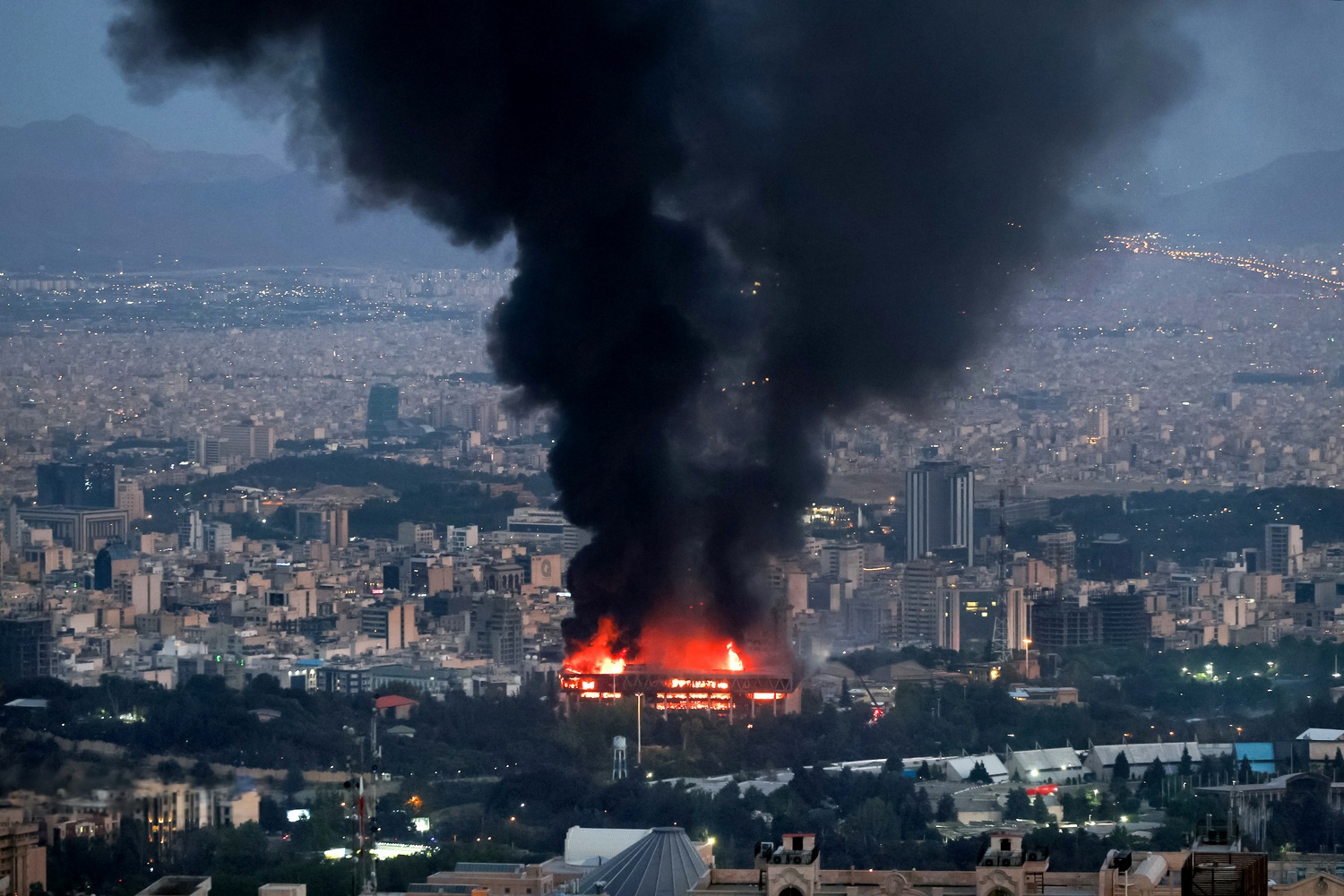
Photo: Mohammed Barno/Avash Media

Français Polski

The era of international law has ended in the sky above Iran

The death of a tyrant is not something to bemoan. It is something to celebrate, and on Saturday evening there was every reason to think of the happiness of the Iranian people, of the tens of thousands of opponents, prisoners and demonstrators whom this ‘Supreme Leader’ had murdered, from the 1,500 or so people he had hanged last year alone, to Mahsa Amini, beaten to death for wearing her headscarf incorrectly, to the invention of jihadism by his regime and to all the victims of the attacks he had instigated around the world, and yet…

Where does this unease that we cannot shake come from? Is it because it is thanks to a man who is anything but a democrat and who hopes to gain political advantage from getting rid of Ali Khamenei? No, not at all, because while it would be absurd to lament the fact that the USSR contributed so much to Hitler’s downfall, how could we regret that it was under the blows of America, even Trump’s America, that this tyrant fell?

What do we fear about all this ?

Should we fear the ‘political vacuum’ created by his death and the ‘regional chaos’ that could ensue? No, not at all, because that would mean wishing for the perpetuation of the dictatorships of Vladimir Putin or Xi Jinping. Any sudden change brings instability, but that does not make the status quo desirable. What is there to fear in this case?

The Iranian regime still has weapons, but not enough to really set the Gulf ablaze. The Sunni Arab street is not going to rise up to defend a Persian, Shiite dictatorship which is losing momentum and which is bombing Sunni countries. On the other hand, it cannot be ruled out that, within Iran’s borders, those nostalgic for the Supreme Leader will attempt to retain their power by force. Blood may flow, but the various factions within the regime will all play their cards and new alliances will be forged. The hardliners will be isolated and creative chaos will thus take the place of the absolute disorder that is order frozen by fear.

Could it be, then, that the desire for independence among ethnic and religious minorities in Iran could upset the entire Middle Eastern border system?

It is not impossible, but even if it did happen, it would not be the demise of Ali Khamenei that should be blamed. What should be blamed is the end of the Ottoman Empire, under which there were no borders; the French and British colonisations, which denied the Kurds a national homeland and drew up multi-national states to better ensure their domination; the Cold War, which had temporarily allowed these artificial borders to remain intact; and the collapse of the Soviet Union, which reawakened a myriad of frozen conflicts in the Middle East and elsewhere – in short, the entire 20th century.

Erasing several months of failures

The shadow cast over this joy lies elsewhere. It is that these bombings and the elimination of the Leader have definitively buried international law.

Donald Trump may well invoke the ‘imminent threat’ that the Islamic Republic allegedly posed to the United States, but there is no reason to believe it. He intervened because his Israeli and Saudi allies were pressing him to do so, because Israeli and American intelligence reported the possibility of targeting a meeting of Iran’s top leaders around the Leader on Saturday morning, and because he wanted to erase several months of failures by claiming the glory of having brought down an indefensible dictatorship.

Donald Trump intervened in Iran because it suited him, and Vladimir Putin can now feign outrage at a ‘cynical violation’ of ‘international law’ in order to relativise his aggression against Ukraine. No one will be fooled, but the fact remains that law of the strongest is now being promoted by both the White House and the Kremlin. The interlude that started at the end of the Second World War, has come to an end in the skies over Iran, and there is no reason to rejoice.

Photo: Mohammed Barno/Avash Media

Français Polski