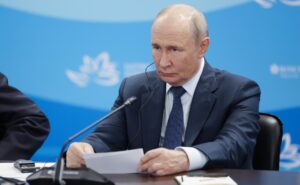
We should be concerned about this, for three reasons. Before winter sets in, Vladimir Putin could both open a second front in Ukraine and challenge the West at the EU’s borders.
The first reason is that the Russian president has his back against the wall. Ukrainian strikes on oil refineries and retail warehouses are emptying shop shelves and drying out petrol stations in Russia. To circumvent Western sanctions, Russia must now buy back the crude oil it sells, and it must buy it back after refining, at a high price. It can only keep its arms factories running at the expense of its other industries and the economy as a whole. Russia is sinking into a crisis from which even its largest cities are beginning to suffer and which only the end of this war could resolve.
It is now so obvious that bankers and economists are even saying so publicly, and the crackdown on dissent is broadening. Previously limited to declared opponents, it is now targeting senior figures in the small liberal Yabloko party and even regional elected representatives and activists from the Communist Party – a party that is, after all, completely subservient to the Kremlin.
Faced with the risk of seeing his credibility eroded even further, Vladimir Putin must therefore score points as quickly as possible. He must do so swiftly, and this is the second reason to fear that he may be prepared to go “all in”, driven by the most hardline of his supporters who are unanimously insisting that without even more massive bombardments, there will be no Russian victory.
A deputy speaker of the Duma has proposed announcing that Ukrainian cities will be crushed under a continuous barrage of bombs in order to force their inhabitants to flee and thereby create chaos throughout the country. It certainly seems that the idea is gaining traction, given that residential areas are being targeted ever more systematically, that the Russian authorities make no secret of their intention to deprive Ukrainians of heating and electricity, and that Vladimir Putin himself has declared that Ukraine had ‘opened Pandora’s box’ by striking Russian refineries.
Russia could therefore soon attempt to drive Ukrainian civilians onto the roads, open a second front in the north of the country and, at the same time, challenge the West by making incursions into one of the Baltic states or Moldova.
This is a scenario that Western intelligence services see taking shape, and the third reason to fear that it might come to pass is that Vladimir Putin may believe he would emerge victorious. Ukraine will not be able to fight on two fronts easily, and even less so if its population is wandering the roads. It is highly unlikely that Donald Trump would want to risk a confrontation with Russia when he already has no idea how to extricate himself from his Iranian fiasco or how to avoid losing Congress in two months’ time.
Donald Trump might give Vladimir Putin free rein in Ukraine, reckon that incursions into the Baltic states would not force NATO to intervene, and argue that an attack on tiny Moldova would be a matter solely for the Europeans, as it is not a member of the North Atlantic Alliance.
Vladimir Putin may believe that by acting boldly without further delay, he could not only destabilise Ukraine before it acquires long-range missiles, but also bring about a rupture in the Western front and demonstrate the military weakness of the Europeans.
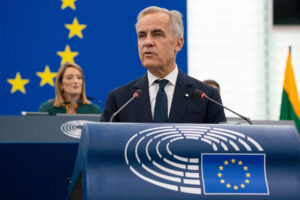
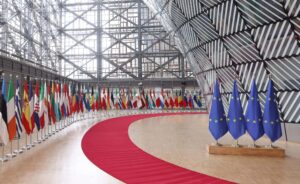
Unfortunately, this is not an absurd scenario, but there are a few thing standing in its way: the absolute unpopularity of the conscription the Kremlin would have to implement; the sustained resistance the Ukrainians will put up; the offensive and defensive weapons that will pour from Europe into Ukraine; the impossibility of Donald Trump remaining passive indefinitely; and the rapid emergence, in the face of danger, of a united European front, both political and military.
There is no doubt that, during his visit to the Kremlin last week, the head of the CIA raised these five points, but the real question is whether Vladimir Putin still has a choice.
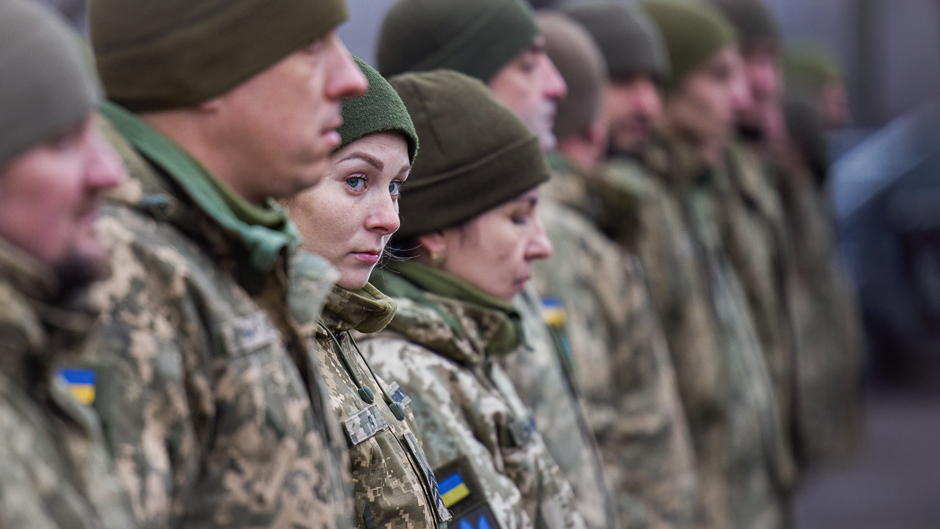
Photo: Ceremony on the occasion of the 30th anniversary of the Armed Forces of Ukraine. President of Ukraine, Creative Commons CC0 1.0 Public Domain