Putin must be made to realise the cost of escalation

Contrary to what Russians believe, their president may not be the richest man in the world. He has rivals, but his fortune is clearly considerable, for in the twenty-seven years he has been at the helm of a country awash with gas and oil, he has had every opportunity to benefit from the kleptocracy he has established.

This money is invested through a cascade of companies whose owners are not easily traceable, but the secret services have been working on it. That is what they are paid to do. Many governments have extensive files on Vladimir Putin’s assets, his investments and the companies he controls, and there is therefore nothing to prevent them from letting him know that this information could be made public.

This would be one way of giving him pause for thought before he embarks on the escalation towards which he is being driven by his economy’s loss of momentum, the failure of his troops in the Donbass and the window of opportunity opening up for him in both the United States and Europe. Not only does the Kremlin leader have a vital need to score points for domestic political reasons, but he believes that the US mid-term elections, the confusion caused by the AfD’s successes in Germany and the presidential campaign now underway in France offer him the opportunity to do so.

He has already begun to intensify the bombardment of Ukrainian towns and infrastructure. He is stepping up provocations on EU territory, and intelligence services unanimously report that he will attempt to open a second front in the north and is preparing to stage a coup in a country that is a member of, or close to, the European Union and NATO.

His objective is clear. He wants to challenge Europeans to increase their military and financial support for Ukraine, whilst at the same time showing them that American protection is definitely no longer guaranteed, and in this way sow fear in each of the 27 EU Member States in order to divide them from within.

Vladimir Putin’s plans are falling into place, but once again he is underestimating the Europeans. He forgets that the invasion of Ukraine led Finland and Sweden to join NATO, that it prompted the entire EU to increase its military spending, and that the Europeans managed to prevent Donald Trump from striking a deal with him at the expense of the Ukrainians. He fails to see that, far from securing Ukraine’s surrender and the EU’s submission, he will only serve to strengthen a united front of the 27, against which his armies will be even more powerless than they are against Ukraine alone.

What the Russian president is contemplating is nothing short of madness that would expose the entire continent to grave dangers before the Kremlin’s defeat becomes apparent.

The looming confrontation and all the escalations it would entail must therefore be avoided at all costs.

We cannot allow Vladimir Putin to play with fire. Unlike what Ms Le Pen is doing, we must above all avoid fuelling his illusions by allowing him to hope that the far right will ‘turn off the tap’ on aid to Ukraine. We must not fuel the absurd fear of a nuclear war, but show absolute determination to rise to the challenge, demonstrate how prepared we are to defend the Union’s eastern borders and, in the face of escalating provocations, respond tit for tat.

We should no longer hesitate to reveal what we know about Vladimir Putin’s corruption. Without further delay, we should set up a joint radio station, Voice of Europe, La Voix de l’Europe, to reach out to the Russian people over the heads of their leaders. Above all, we should show that we, too, can cut off the communications networks of major banks and government departments, disrupt the internet or hack into a television channel. What the Russian intelligence services can do, ours can do as well.

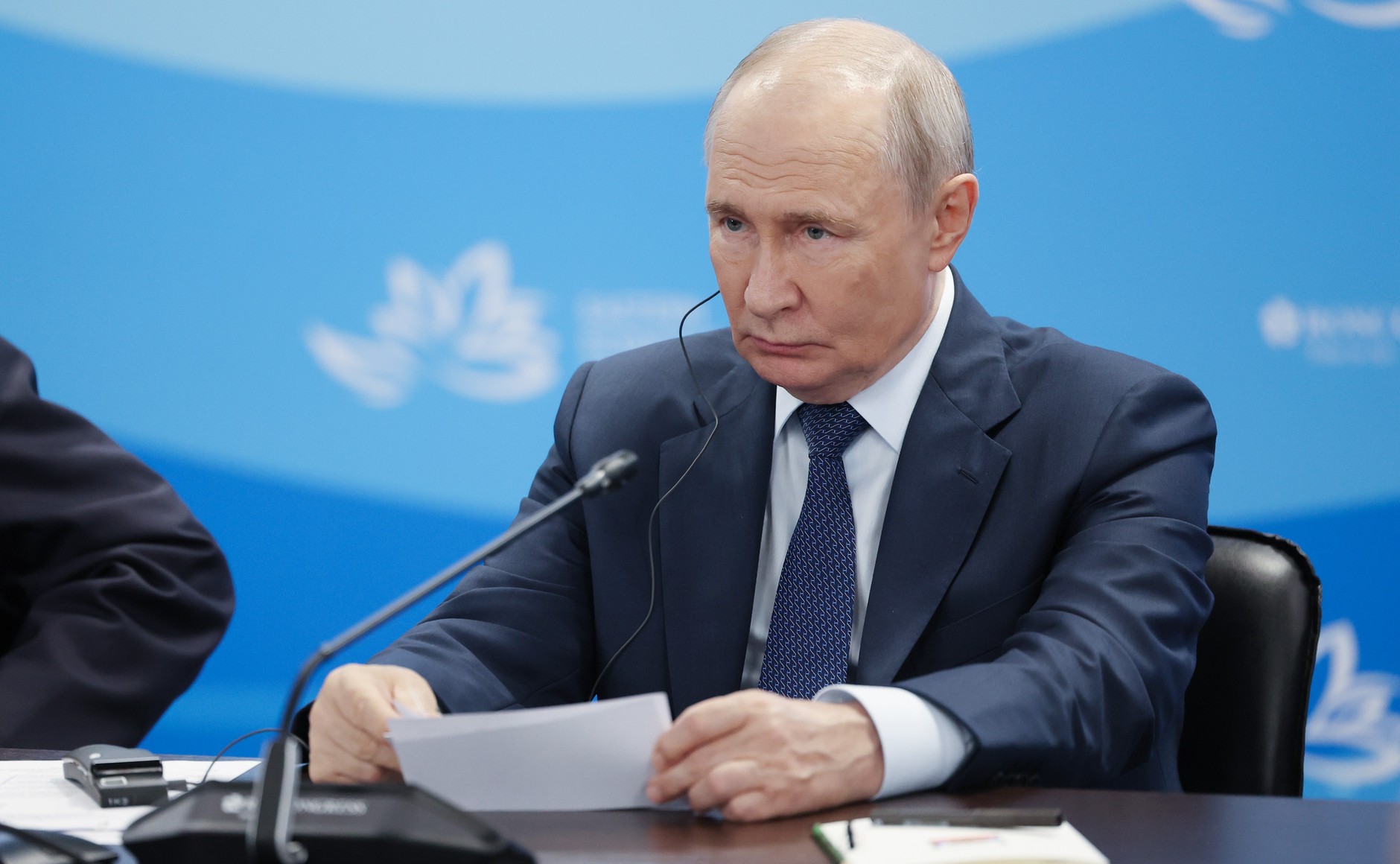
Photo: kremlin.ru

Français Polski Română

Putin must be made to realise the cost of escalation

Contrary to what Russians believe, their president may not be the richest man in the world. He has rivals, but his fortune is clearly considerable, for in the twenty-seven years he has been at the helm of a country awash with gas and oil, he has had every opportunity to benefit from the kleptocracy he has established.

This money is invested through a cascade of companies whose owners are not easily traceable, but the secret services have been working on it. That is what they are paid to do. Many governments have extensive files on Vladimir Putin’s assets, his investments and the companies he controls, and there is therefore nothing to prevent them from letting him know that this information could be made public.

This would be one way of giving him pause for thought before he embarks on the escalation towards which he is being driven by his economy’s loss of momentum, the failure of his troops in the Donbass and the window of opportunity opening up for him in both the United States and Europe. Not only does the Kremlin leader have a vital need to score points for domestic political reasons, but he believes that the US mid-term elections, the confusion caused by the AfD’s successes in Germany and the presidential campaign now underway in France offer him the opportunity to do so.

He has already begun to intensify the bombardment of Ukrainian towns and infrastructure. He is stepping up provocations on EU territory, and intelligence services unanimously report that he will attempt to open a second front in the north and is preparing to stage a coup in a country that is a member of, or close to, the European Union and NATO.

His objective is clear. He wants to challenge Europeans to increase their military and financial support for Ukraine, whilst at the same time showing them that American protection is definitely no longer guaranteed, and in this way sow fear in each of the 27 EU Member States in order to divide them from within.

Vladimir Putin’s plans are falling into place, but once again he is underestimating the Europeans. He forgets that the invasion of Ukraine led Finland and Sweden to join NATO, that it prompted the entire EU to increase its military spending, and that the Europeans managed to prevent Donald Trump from striking a deal with him at the expense of the Ukrainians. He fails to see that, far from securing Ukraine’s surrender and the EU’s submission, he will only serve to strengthen a united front of the 27, against which his armies will be even more powerless than they are against Ukraine alone.

What the Russian president is contemplating is nothing short of madness that would expose the entire continent to grave dangers before the Kremlin’s defeat becomes apparent.

The looming confrontation and all the escalations it would entail must therefore be avoided at all costs.

We cannot allow Vladimir Putin to play with fire. Unlike what Ms Le Pen is doing, we must above all avoid fuelling his illusions by allowing him to hope that the far right will ‘turn off the tap’ on aid to Ukraine. We must not fuel the absurd fear of a nuclear war, but show absolute determination to rise to the challenge, demonstrate how prepared we are to defend the Union’s eastern borders and, in the face of escalating provocations, respond tit for tat.

We should no longer hesitate to reveal what we know about Vladimir Putin’s corruption. Without further delay, we should set up a joint radio station, Voice of Europe, La Voix de l’Europe, to reach out to the Russian people over the heads of their leaders. Above all, we should show that we, too, can cut off the communications networks of major banks and government departments, disrupt the internet or hack into a television channel. What the Russian intelligence services can do, ours can do as well.

Photo: kremlin.ru

Français Polski Română