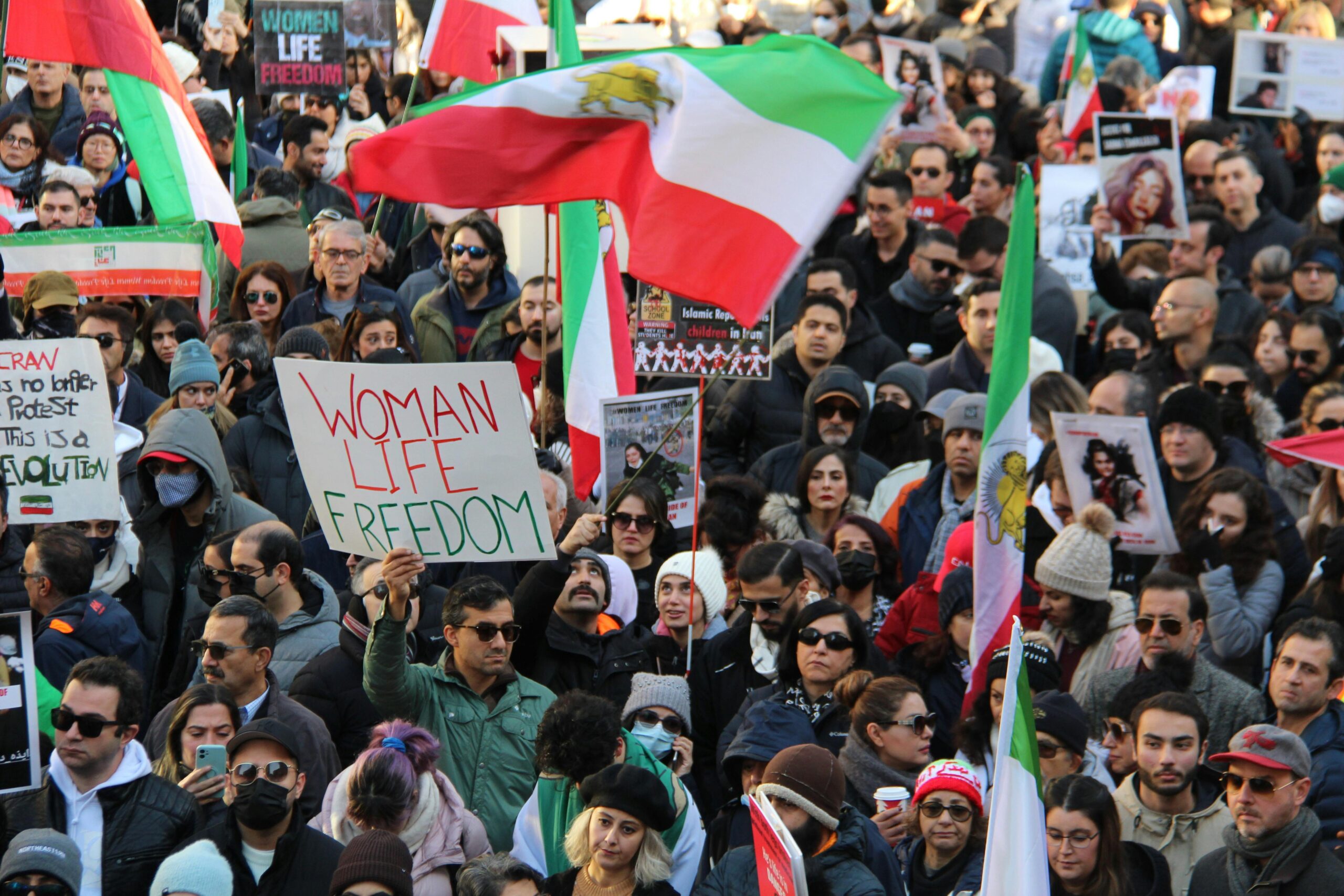
This is the agony of a dictatorship. Perhaps it will be long and painful. Perhaps, on the contrary, in the coming days we will see the sudden collapse of the Iranian theocracy that so quickly hijacked the democratic revolution of 1979.
All scenarios are possible, but protests against the high cost of living have spread rapidly, and what is certain is that this regime is exhausted, divided, despised, intellectually depleted and has been constantly challenged for nearly three decades.
In 1997, all it took was Mohammad Khatami, a reformer from inside the ruling establishment, to promise greater tolerance, freedoms and respect for the law, and women, young people and almost the entire country rushed to the polls and elected him as President of the Republic. Iran at that time was already rejecting theocracy, but in this Islamic Republic, the noun counts for much less than the adjective.
The Republic and its president are overshadowed by the religious institutions whose leader, Ali Khamenei, the ‘Supreme Leader’, controls the courts, the media, the police, the Basij, a militia responsible for religious order, and above all the Revolutionary Guards, the regime’s army, a state within a state and the country’s leading economic power. Mohammad Khatami was therefore unable to keep almost any of his promises, but the Iranians re-elected him in 2001 to reaffirm their desire for change.
Five years later, the Leader arranged for the presidency to go to a young conservative, Mahmoud Ahmadinejad, whose rigged re-election sparked nearly six months of protests and demonstrations. Dubbed the ‘Green Revolution’, this movement foreshadowed the Arab Spring of 2011, both in its democratic demands and its use of social media to organise rallies.
The Green Revolution was crushed in bloodshed, but Iran then elected and overwhelmingly re-elected a reformer, Hassan Rouhani. In 2017, twenty years after Khatami’s first election, the theocracy was facing its fifth popular rejection when police brutality killed a young Kurdish student, Mahsa Amini, who had been arrested for wearing her headscarf incorrectly.
This marked the beginning of the ‘Woman, Life, Freedom’ protest movement, which specifically targeted the Supreme Leader and led to such a mass rejection of the veil that the regime has now virtually given up on enforcing its wearing. This movement was crushed, like the others, but the regime had to give in to the women’s uprising even before the Israeli-American bombings revealed the regime’s impotence. Now it is about the prices – an inflation rate of over 50% – that have mobilised the bazaar merchants – once the regime’s pillars – along with the students and the towns in the provinces.
The current president, a reformer, has just declared, with the obvious intention of getting the mullahs’ attention, that ‘if we do not solve the problem of people’s livelihoods, we will end up in hell,’ and he was right. By firing, the regime risks provoking a popular uprising. By not firing, it would show that power is up for grabs. The Supreme Leader is old, sick and tired. The regime and the clergy itself are increasingly divided. Anything can happen, but what we must hope for today is that the most clear-headed members of the regime will take responsibility by announcing the opening of prisons and new parliamentary elections, allowing for the drafting of a new constitution.
Iran needs a negotiated transition that can only be initiated from within the regime, as in Spain after Franco. If this does not happen, there will be civil war in the short or medium term, bloodshed and the intervention of so many foreign actors that international tensions will be further exacerbated. The Iranian people do not deserve this, and the world even less so.
( Photo : Sima Ghaffarzadeh )