The Western mote and the Russian beam

Is he making the same mistake he made three years ago? In 2022, Vladimir Putin only invaded Ukraine after he had convinced himself that neither the United States nor the European Union would do anything to thwart his plans.

Everything led him to believe this, as the Americans did not issue the slightest warning and the Europeans, despite being duly informed by Washington of the build-up of Russian troops on the Ukrainian border, refused to believe that there was any real danger.

They won’t move, I can go ahead, the Russian president had told himself, completely misjudging the strength and speed with which the West would come to Kiev’s rescue.

This blindness cost him dearly. The US was quick to deliver weapons to Ukraine. The Europeans were even quicker to do so and, at the same time, began to establish a common defense policy. On the ground, the only real change Vladimir Putin has been able to impose has been the formal annexation of territories already controlled by pro-Russian secessionist movements. His navy was defeated in the Black Sea and his economy, after being strongly stimulated by increased military spending, is now showing serious signs of running out of steam.

For Vladimir Putin, the outcome of this aggression is simply catastrophic, yet he refused to take the hand extended to him by Donald Trump. The US president was prepared to recognize the annexation of Crimea, accept the fait accompli of the Donbass’s integration into the Russian Federation, halt all military support to Ukraine, and close the doors of the Atlantic Alliance to it. Even as he was losing ground, Vladimir Putin was offered the opportunity by the United States to save face, and what did he do?

He refused. He wants the demilitarization of Ukraine and the replacement of Volodymyr Zelensky with one of his own men. He wants to be able to claim an indisputable victory that would allow him to establish a protectorate over what was once the Empire of the tsars and thereby intimidate the whole of Europe. In short, he believes himself strong enough to reject what was a clear proposal for an American-Russian agreement at the expense of the Europeans.

As if he had learned nothing, Vladimir Putin seems to be repeating, on an even larger scale, the mistake he made three years ago, except…

Except that it is still unclear what Donald Trump will do now that he realizes that the Russian president does not want peace. He will undoubtedly help Ukraine defend itself against Russian drones and missiles, but will he go so far as to give it the means to strike Russia’s military infrastructure hard enough to force the Kremlin’s master into real negotiations?

This is far from certain, as it would require Donald Trump to engage in a military showdown with Russia, despite his promise to his voters never to involve the United States in new wars, even indirect ones.

Vladimir Putin may believe that his former friend Donald will not take this step for fear of weakening himself in the run-up to the 2026 midterm elections. He can count on the White House to err on the side of caution and limit itself to half-measures. He can also tell himself that the French, German, Polish, Spanish, and British leaders are all going through rough patches, that the European Union wants to assert itself but is not in the best shape, and that the far right, with which he has close ties, is gaining ground in almost all of its capitals.

This time, the Russian president’s calculation is not necessarily wrong, but he is forgetting two things.

The first is that it will be difficult for Donald Trump to allow himself to be humiliated by Vladimir Putin and that the United States could hardly allow the Sino-Russian axis to prevail in Ukraine without China becoming convinced of its ability to become the dominant power of this century.

In Washington, the die is not yet cast, and the second thing the Russian president should take into account is that his only major European ally, Viktor Orbán, is steadily weakening; that the rise of the European far right does not guarantee that they will come to power, at least not alone, and that not all of them want Russia to dominate Europe.

Today, as three years ago, Vladimir Putin despises the West and underestimates us, seeing only the mote in our eye and not the beam in his own.

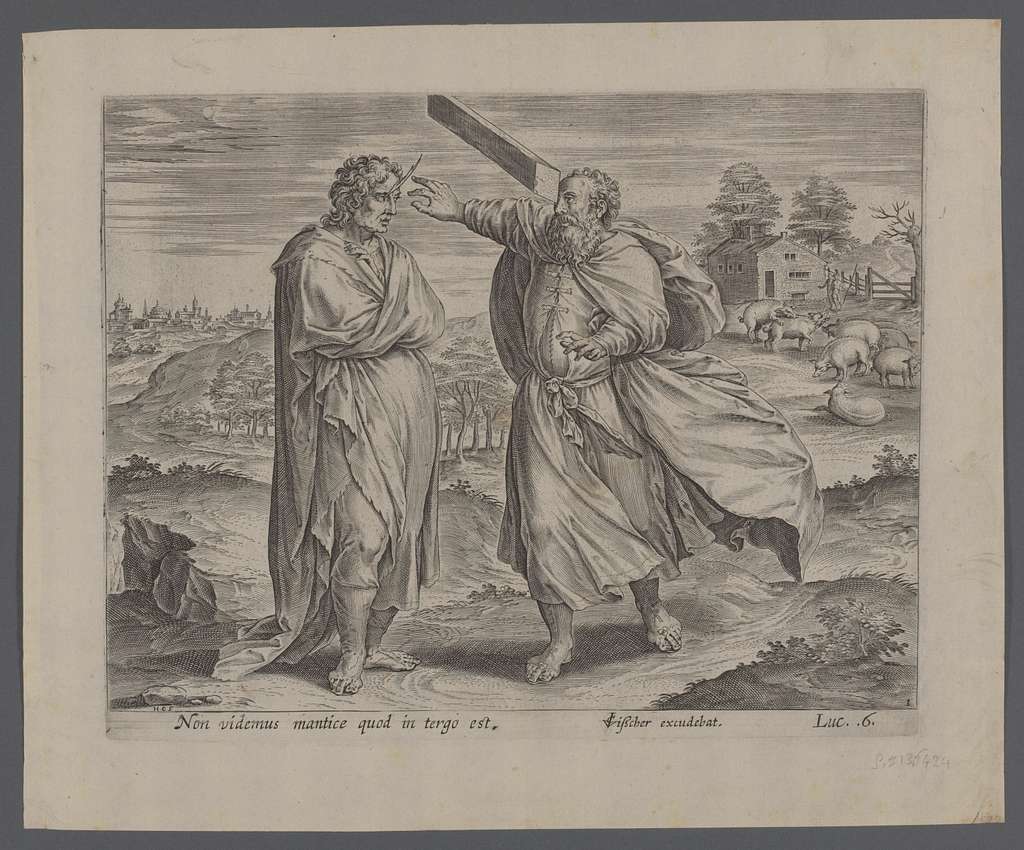
(Image: The parable of the Mote and the beam 1585 print by Ambrosius Francken I, S.II 136424, Prints Department, Royal Library of Belgium)

Français Polski

The Western mote and the Russian beam

Is he making the same mistake he made three years ago? In 2022, Vladimir Putin only invaded Ukraine after he had convinced himself that neither the United States nor the European Union would do anything to thwart his plans.

Everything led him to believe this, as the Americans did not issue the slightest warning and the Europeans, despite being duly informed by Washington of the build-up of Russian troops on the Ukrainian border, refused to believe that there was any real danger.

They won’t move, I can go ahead, the Russian president had told himself, completely misjudging the strength and speed with which the West would come to Kiev’s rescue.

This blindness cost him dearly. The US was quick to deliver weapons to Ukraine. The Europeans were even quicker to do so and, at the same time, began to establish a common defense policy. On the ground, the only real change Vladimir Putin has been able to impose has been the formal annexation of territories already controlled by pro-Russian secessionist movements. His navy was defeated in the Black Sea and his economy, after being strongly stimulated by increased military spending, is now showing serious signs of running out of steam.

For Vladimir Putin, the outcome of this aggression is simply catastrophic, yet he refused to take the hand extended to him by Donald Trump. The US president was prepared to recognize the annexation of Crimea, accept the fait accompli of the Donbass’s integration into the Russian Federation, halt all military support to Ukraine, and close the doors of the Atlantic Alliance to it. Even as he was losing ground, Vladimir Putin was offered the opportunity by the United States to save face, and what did he do?

He refused. He wants the demilitarization of Ukraine and the replacement of Volodymyr Zelensky with one of his own men. He wants to be able to claim an indisputable victory that would allow him to establish a protectorate over what was once the Empire of the tsars and thereby intimidate the whole of Europe. In short, he believes himself strong enough to reject what was a clear proposal for an American-Russian agreement at the expense of the Europeans.

As if he had learned nothing, Vladimir Putin seems to be repeating, on an even larger scale, the mistake he made three years ago, except…

Except that it is still unclear what Donald Trump will do now that he realizes that the Russian president does not want peace. He will undoubtedly help Ukraine defend itself against Russian drones and missiles, but will he go so far as to give it the means to strike Russia’s military infrastructure hard enough to force the Kremlin’s master into real negotiations?

This is far from certain, as it would require Donald Trump to engage in a military showdown with Russia, despite his promise to his voters never to involve the United States in new wars, even indirect ones.

Vladimir Putin may believe that his former friend Donald will not take this step for fear of weakening himself in the run-up to the 2026 midterm elections. He can count on the White House to err on the side of caution and limit itself to half-measures. He can also tell himself that the French, German, Polish, Spanish, and British leaders are all going through rough patches, that the European Union wants to assert itself but is not in the best shape, and that the far right, with which he has close ties, is gaining ground in almost all of its capitals.

This time, the Russian president’s calculation is not necessarily wrong, but he is forgetting two things.

The first is that it will be difficult for Donald Trump to allow himself to be humiliated by Vladimir Putin and that the United States could hardly allow the Sino-Russian axis to prevail in Ukraine without China becoming convinced of its ability to become the dominant power of this century.

In Washington, the die is not yet cast, and the second thing the Russian president should take into account is that his only major European ally, Viktor Orbán, is steadily weakening; that the rise of the European far right does not guarantee that they will come to power, at least not alone, and that not all of them want Russia to dominate Europe.

Today, as three years ago, Vladimir Putin despises the West and underestimates us, seeing only the mote in our eye and not the beam in his own.

(Image: The parable of the Mote and the beam 1585 print by Ambrosius Francken I, S.II 136424, Prints Department, Royal Library of Belgium)

Français Polski

Leave a Reply

Your email address will not be published. Required fields are marked *