Sorry, Mr Zelensky, but the answer is no. We are sorry to have to tell you this, but no, Mr President, Ukraine cannot become a full member of the Union overnight.
We fully understand that you have just rejected any notion of ‘phased’ accession or ‘symbolic’ membership. We are, of course, well aware that by resisting Russian aggression for the past four years, you are defending not only your own borders but also those of Poland, the Baltic states and, therefore, the Union as a whole. We know what we owe you, but please understand that by saying yes to you, the Union would risk its own disintegration, and that nothing could justify putting you and us in such danger.
If Ukraine were to become the 28th Member State of the European Union as early as January, five countries in the Western Balkans – six if Serbia is included – would be justified in saying that they, too, could wait no longer. Already very difficult to govern with 27 members, the Union would then expand to 34, and the rule of unanimity, still in force, would regularly bring its functioning to a standstill.
The treaties would have to be amended. This would require endless negotiations, and once a compromise had finally been reached, one or more Member States would undoubtedly refuse to ratify it. A major crisis would paralyse the Union, and even if, Mr President, we were to make an exception solely for you and avoid amending the treaties, the weight of your agricultural sector is such that the fear of competition would mobilise rural communities against your country’s accession.
Should we really risk that the Union ends up refusing to expand to include Ukraine and exacerbates tensions in the Balkans to the point of leaving the field open to Trump, Xi Jinping and Putin?
Obviously not. We must certainly not hand such huge gifts to our adversaries, but then what?
Well, let’s think big. Let’s stop thinking in the old way. Let us no longer think in terms of enlarging an economic zone governed by a single set of rules, but rather of establishing a political and military entity with varying degrees of integration. Some Member States – those that so wish – will strengthen their political ties, as they are already doing. Those that do not wish to do so will remain bound solely by the provisions of the treaties they signed upon joining the Union.
There would thus be no need to change the texts that govern us, as those wishing to go further and faster would do so on the basis of agreements binding only upon themselves, to which non-member countries could join. It is so simple and so true that the joint initiatives of Paris, London and Berlin are already outlining this development.
It is to these three capitals that we owe the formation of the ‘coalition of the willing’ in support of Ukraine, and subsequently the group of some fifty states ready, once the fighting has ceased, to ensure freedom of navigation in the Strait of Hormuz. With Poland and Italy, this Group of 3 is now set to become a Group of 5. Outside the treaties, the Union now has a political vanguard that is opening up new horizons for it. It is small in number, some would say almost elitist, but several major democracies that are no more part of the Union than Britain are already moving closer to it, and Donald Trump will continue to swell its ranks by persisting in his attacks on the Atlantic Alliance.
Having become, under Russian fire, a leading military power, Ukraine has every right to stand alongside those seeking to anticipate the consequences of the transatlantic rift that it was the first to experience. Ukraine must deepen its economic ties with the EU, but without wasting time on futile battles; it is among the vanguard of democracies that it must integrate.
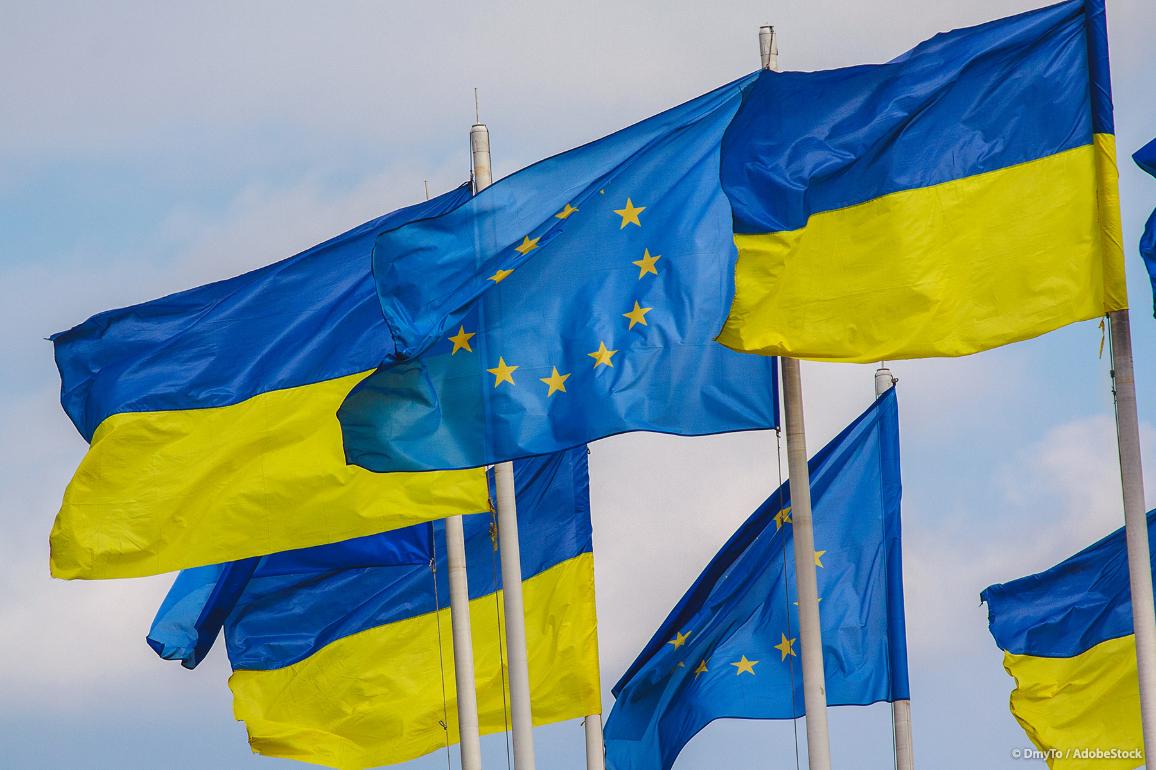
Photo: European Union