Talleyrand had warned them. ‘You can do anything with bayonets,’ he said, ‘except sit on them,’ and the Supreme Leader of Iran and his regime will soon learn this profound truth.
In the coming days or months, they will fall. After a moment of wild happiness, Iran will have to rebuild itself, while the entire Middle East will be reshaped. The fall of this dictatorship will not open the gates of paradise, but yes, it will fall, and so much the better, because all it has got left is weapons.
Bullets, drones and tanks: these are the weapons with which the Supreme Leader threatened, on Friday, demonstrators who no longer want him or his regime. Weapons are used to kill and intimidate. They are all the more important given that, in almost half a century of existence, the Islamic Republic has inevitably attached itself to entire social groups, millions of families who would lose everything with it and will try to defend it, but weapons run out.
Either new weapons must be purchased when the arsenals are empty, or something must be offered to recreate a minimum consensus. In any case, money is needed, a lot of money. The nuclear programme, international sanctions and the financing of the Lebanese Hezbollah, the Syrian dictatorship, the Yemeni Houthis, the Iraqi Shiite militias and all the other regional relays of the mullahs have emptied the coffers to such an extent that there is no money left to offer the Iranians, neither in wage increases nor in infrastructure or social spending.
Nor is there any question of reviving the country’s dreams of national greatness, since the Iranian revolution no longer inspires anyone in the Middle East and the mullahs have lost all their regional influence there by losing their friends and allies. The mullahs no longer even hope to instil lasting fear in the Iranian people, now that they have been unable to resist Israeli-American bombing or to strike Tel Aviv in retaliation.
This regime is stripped to the bone.
This regime is laid bare. This regime is finished because its only real success, women’s access to university education, has backfired since female students succeeded in demanding to abandon the veil. Many military figures and supporters of the regime will soon turn their backs on it in order to redeem themselves or avoid futile atrocities.
Between the hardliners and the pragmatists, the ideologues and the reformers, the blind and the realistic, this regime can only fracture. A page is turning in Tehran. Let us hope that it will be as bloodless and short as possible, but in any case, major changes are on the horizon.
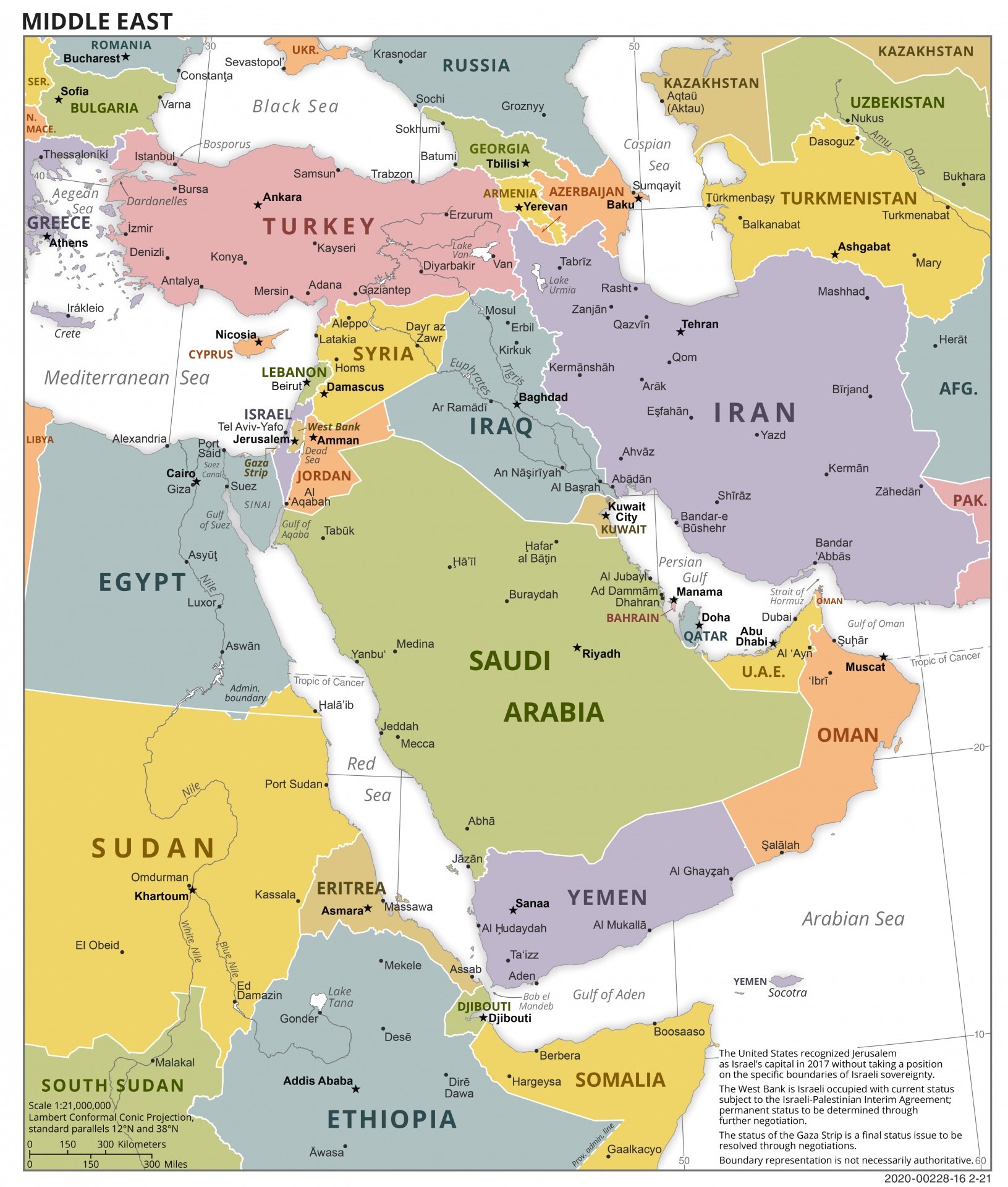
Once the confrontation between the Iranian-Shiite axis and the powerful Sunnis is over, nothing will set the borders in stone, and the states created by colonial divisions will become ever more fragmented.
This is already happening in Syria, where the Kurdish question could soon lead to Turkish intervention and then compromise the community balance in neighbouring Lebanon. Long autonomous, Iraqi Kurdistan could become even more detached from Baghdad. In Iran itself, religious and national minorities living on the country’s borders could be tempted by centrifugal adventures.
The entire region could be imperceptibly plunged into tensions pitting rival powers such as Saudi Arabia, Turkey, the Emirates and Iran, which would soon regain allies and strength, against each other. The immense paradox is that Israel would then no longer have any state adversaries and that Iran’s old vision of a rapprochement between the three non-Arab regional powers – Turkey, Iran and Israel – could come back into favour.
Image: Sam Kal